
Technician Product Verification Training for Pharmacy Technicians
This training prepares pharmacy technicians to support technician product verification (TPV) services through practical instruction in accuracy verification, workflow integration, patient safety, and regulatory considerations.
Designed as a microcredential program, this course awards a digital badge upon successful completion and provides technicians with specialized training to support expanded responsibilities within pharmacy operations.
The program focuses on the knowledge and skills needed to participate in technician product verification processes while maintaining medication safety, quality assurance, and workflow efficiency. A simulation-based verification assessment is also included to help technicians apply learned concepts and demonstrate competency in identifying and preventing dispensing errors.
Course content includes:
- Fundamentals of technician product verification and regulatory considerations
- Roles and responsibilities within technician product verification workflows
- Medication safety principles and error prevention strategies
- Accuracy verification processes and quality assurance practices
- Documentation and compliance considerations
- Workflow integration and operational best practices
- Communication and collaboration within the pharmacy team
- Strategies for supporting efficient and safe prescription processing
Technicians will also develop practical skills in identifying potential dispensing errors, supporting quality control processes, maintaining accurate documentation, and contributing to safe and efficient pharmacy operations.
In many states and practice settings, technician product verification is permitted only when specific training, competency validation, certification, or employer-based program requirements are met. This course is designed to support technicians and employers in preparing for expanded verification responsibilities while maintaining compliance with applicable regulatory and workplace expectations.
This training is designed to help pharmacy technicians build specialized operational expertise, support advanced pharmacy workflow models, and prepare for expanded responsibilities and professional growth opportunities within pharmacy practice.
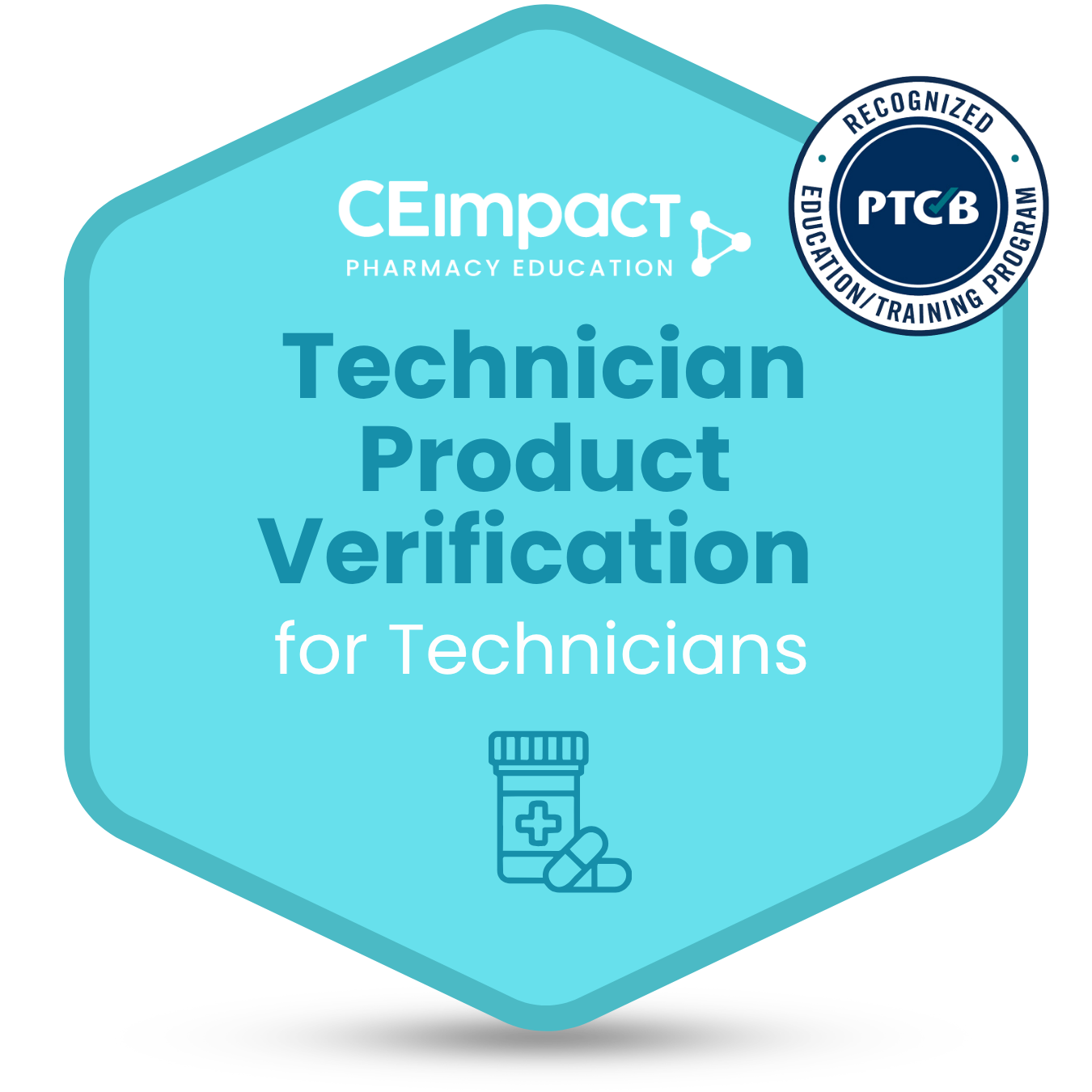
Technicians who successfully complete the program will earn a digital badge recognizing their competency in technician product verification.
Interested in pursuing the Adv-CPhT designation? CEimpact also offers a bundled version of this course that includes access to the PTCB certificate exam. Access it HERE.
Earn your microcredential and strengthen your role in advanced pharmacy operations – enroll today.
Claim Your Badge
You will receive an email from Credly (our credential partner), after you complete the course, inviting you to claim your digital badge for Technician Product Verification - Technician. This will allow you to easily share your achievement with colleagues, managers, and your professional network on LinkedIn and other platforms. When you receive the email, please click the button and create an account on Credly.com so that you can “accept” the badge.
Need help? Find a step-by-step tutorial video at this link.
 CEImpact is accredited by the Accreditation Council for Pharmacy Education as a provider of continuing pharmacy education. Obtain CPE credit by completing the course, followed by the exam and evaluation (if applicable). Once successfully completed, your course will appear in your Completed Courses tab. Access your CPE statement of credit at